

long-distance feed distribution
Long-distance feed distribution is a critical link between modern feed production and animal farms that are often located hundreds or thousands of kilometers away. Its main goal is to move large volumes of feed efficiently, safely, and consistently while maintaining nutritional quality from the mill to the animals’ feeding troughs.The process usually begins with careful planning and forecasting. Farms share information about herd size, growth stages, and expected consumption, allowing distributors to schedule production and transport. Accurate demand forecasting reduces the risk of stockouts that can affect animal performance, as well as overproduction that leads to storage problems and waste.Transportation is at the core of long-distance feed distribution. Common modes include bulk trucks, railcars, barges, and in some regions coastal ships. Bulk trucks are flexible and suitable for medium distances and frequent deliveries. Rail and water transport become cost-effective for large volumes and very long distances, although they require transfer points and more complex coordination. In all cases, equipment must be designed to handle powders, pellets, or crumbles without causing excessive breakage or segregation of ingredients.Maintaining feed quality during transit is a major concern. Moisture control is essential to prevent mold growth and nutrient degradation. Vehicles and containers must be dry, clean, and often sealed to limit exposure to rain, humidity, and pests. Temperature can also matter, particularly for feeds rich in fats or sensitive additives such as vitamins, enzymes, and probiotics. Good loading and unloading practices help limit dust, contamination, and physical damage to pellets, which in turn supports consistent feed intake by animals.Traceability and documentation support both safety and efficiency. Each batch of feed should be traceable from raw materials through processing and distribution to the final user. Delivery documents and digital records typically include batch numbers, nutritional specifications, production dates, and recommended storage conditions. This information is vital if a quality issue arises and rapid investigation or recall is required.On the farm side, long-distance distribution is closely linked to storage and handling infrastructure. Silo capacity, auger systems, and on-farm inventory management all influence delivery frequency and load size. Efficient coordination minimizes partial loads and empty returns, lowering transportation costs and environmental impact. Increasingly, digital tools, sensors, and remote monitoring of silo levels enable automatic reordering and more precise logistics planning.Sustainability is an emerging focus. Optimized routing, higher-capacity vehicles, and multimodal transport can reduce fuel consumption and emissions. Some distributors combine shipments or backhaul other agricultural products to avoid running empty. At the same time, keeping the feed safe and high quality is non-negotiable, as poor feed can lead to health problems, lower productivity, and greater overall waste.In summary, long-distance feed distribution is a complex logistical and technical operation that connects feed manufacturing with livestock and aquaculture operations across large geographic areas. Success depends on reliable transport, quality preservation, accurate forecasting, robust traceability, and close coordination with farms, all under growing expectations for safety, efficiency, and environmental responsibility.
Products
Category:
-
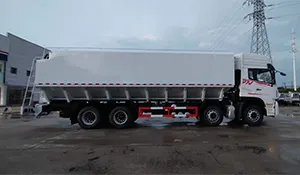
Dongfeng special chassis 4x8 bulk feed transport vehicle
Category: Bulk feed truckBrowse number: 3Number:Release time: 2026-03-26 10:33:00The 4x8 bulk feed transport vehicle is designed for large-scale livestock operations, delivering feed efficiently and safely. Featuring multi-compartment tanks, adjustable electric or hydraulic augers, and high-capacity loading, it reduces trips and improves farm logistics. Ideal for poultry, pig, and cattle farms seeking reliable, high-performance feed delivery solutions.
News
Category:
No search results found!
Case
Category:
No search results found!
Video
Category:
No search results found!
Download
Category:
No search results found!
Job
Category:
No search results found!
Featured Products
No search results found!



 WhatsApp
 Phone
Phone